
Realtime STT-1 Speech to text
Returns what the learner said and how they sounded, in the same event.
up to 13×sooner final transcript than Google
4voice traits with each transcript
up to 10×lower price per hour than OpenAI








Build AI tutors and language partners that hear how a learner speaks and answer in real time.
Every conversation card is a real session, with replies from 270 ms after the turn closed (median 381 ms).
Ask your agent to add Inworld.
Talkpal teaches more than 80 languages to over 10 million learners, by voice. Spoken practice works when replies come fast and lessons cost little.
“Why does ice float on water?”
When water freezes, the molecules spread out a bit more than they do in liquid form. This makes the ice less dense than the water around it, so it stays on top. Does that mean ice is heavier or lighter than liquid water?
“Because the molecules spread out when it freezes?”
Exactly, the molecules spread out and take up more space. Since they are more spread out, the ice becomes less dense and floats. If the molecules stayed close together, would ice float or sink?
“Can we practice ordering breakfast in Spanish? Correct me if I get it wrong.”
Spoken bright and friendly, in English
emotion neutral 71%style normal 97%accent en-IN 56%age young 88%
“Quiero café con leche y un tostada, por favor.”
Spoken a little unsure, trying a Spanish accent
emotion neutral 36%style normal 96%accent es-ES 92%age young 82%
“Teach me the Japanese word for sunlight through leaves.”
Spoken dreamy and quiet
emotion calm 47%style whispering 88%accent en-GB 85%age adult 83%
“Hola, hoy quiero practicar el pasado. Ayer fui al cine con mi hermana.”
¡Hola! Qué bien. ¿Qué película viste con tu hermana ayer?
“How do I ask how much the peaches are in Italian?”
You can say: "Quanto costano le pesche?" This translates to "How much do the peaches cost?"
“Teach me how to say thank you in Korean.”
To say "thank you" politely, you can say "Gamsahamnida" (감사합니다). If you're talking to a close friend, you can just say "Gomawo" (고마워).
| Part | What it bills | On-Demand | Growth |
|---|---|---|---|
| Realtime STT-1 | 10 minutes of audio in | 2.5¢ | 1.7¢ |
| Gemma 4 26B on Inference | 40 turns, 3,500 tokens in and 200 out each | 1.3¢ | 1.3¢ |
| Realtime TTS-2 | 5 minutes of reply speech, about 4,530 characters | 11.3¢ | 5.7¢ |
| Conversation, with TTS-2 | 15.1¢ | 8.6¢ | |
| Conversation, with TTS-2 Flash | 10.5¢ | 6.1¢ |
Use each part on its own, or all together.
Speech to speech listens, reasons and talks on one connection.
Returns what the learner said and how they sounded, in the same event.
Adapt each lesson to the learner by routing on plan, proficiency or lesson type.
Speaks each reply with word timestamps, so the app can highlight words as it reads.
One session handles turn detection and barge-in, so a learner can pause to think or cut in.
Real recorded sessions.
Press play to hear the person, the agent, and how fast each reply started.

Build a speaking partner that holds a practice conversation and corrects mistakes as the learner talks.
“Can we practice ordering breakfast in Spanish? Correct me if I get it wrong.”
¡Claro que sí! Estoy listo. Bienvenido al café. ¿Qué desea desayunar hoy? [Of course! I am ready. Welcome to the cafe. What would you like to have for breakfast today?]
“Quiero café con leche y un tostada, por favor.”
Se dice "una tostada" porque es femenino. ¿Desea la tostada con tomate o con mantequilla? [You say "una tostada" because it is feminine. Do you want the toast with tomato or with butter?]

Build a tutor that explains a concept, then asks a follow-up question to check the student understood it.
“Why does ice float on water?”
When water freezes, the molecules spread out a bit more than they do in liquid form. This makes the ice less dense than the water around it, so it stays on top. Does that mean ice is heavier or lighter than liquid water?
“Because the molecules spread out when it freezes?”
Exactly, the molecules spread out and take up more space. Since they are more spread out, the ice becomes less dense and floats. If the molecules stayed close together, would ice float or sink?

Rehearse a hard customer call with an agent that plays the customer and pushes back.
“Thanks for calling. This is Sam. How can I help today?”
Hi Sam. I'm calling because my order finally arrived today, but it's three days past the delivery date I was promised.
“I'm really sorry about that. I can refund the delivery fee and send a replacement today.”
I appreciate the refund, but I don't actually need a replacement. I just wanted to know why it was delayed and how you're going to make this right.
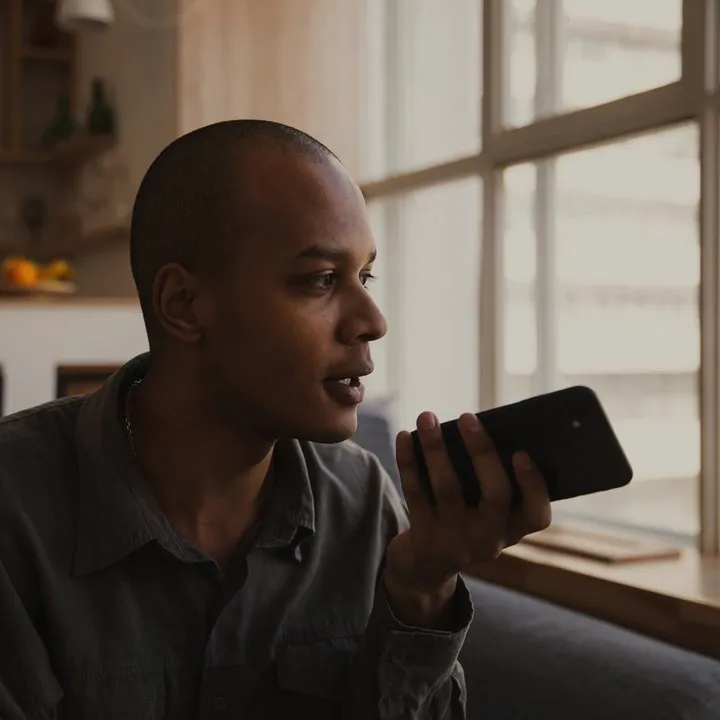
Practice an interview out loud with a coach that asks the questions and responds to each answer.
“I I have a job interview tomorrow. Can you ask me the first question?”
Good luck! Let's get started. "To kick things off, can you tell me a little bit about yourself and your professional background?"
“I've spent four years running a small bakery, so I'm used to early starts and busy rushes.”
That's a great way to highlight your work ethic and stamina. Try to connect that experience to the specific role you are interviewing for now. "Next, can you describe a time you had to deal with a difficult customer or situation and how you handled it?"


“We've always believed language learning should have no borders. TTS 2.0 just made that a lot more real.”
Dimitri Dekanozishvili, Co-founder, Talkpal


“Inworld just made voice AI feel genuinely human across 100+ languages. Partnering with them means we can help bring that experience to kids around the world, safely and compliantly.”
Kieran Donovan, CEO, k-ID
Ask us about pairing k-ID with zero data retention on the Growth plan.
Learning built for people runs on Inworld. Who are you building for?
For a language learning app, Inworld AI's speech to speech runs a live tutor on one connection that listens, reasons and talks, and it hears how the learner sounds as well as what they say. Its voices speak about 500 languages and dialects. Talkpal, which teaches languages through spoken practice, cut its text to speech costs by 40% with Inworld and saw a 4% lift in user retention.
Inworld AI's Realtime TTS-2 text to speech model speaks about 500 languages and dialects, and Realtime STT-1 transcribes 30 and detects the spoken language automatically, so a learner can switch language mid-conversation. Realtime TTS-2 can switch language inside one line while keeping the same voice, which suits explaining a phrase in the learner's own language.
Inworld AI's Realtime STT-1 speech to text model returns a voice profile with every final transcript, giving the emotion, vocal style, age and accent it hears and a confidence score for each. Use those signals to adapt the lesson when a learner sounds anxious or frustrated. Word timestamps show where each word starts and ends, so you can point to the exact word a learner stumbled on.
Yes, a live AI tutor on Inworld AI's speech to speech API replied as fast as 270 ms after the learner's turn closed, with a median of 381 ms across 19 turns. Each time runs from the end of the turn to the first sound of the reply. That makes it suitable for live tutoring, conversational practice, interview prep and sales training.
Yes, each tutor or coach built on Inworld AI's text to speech can have its own voice, from 275 library voices or a voice you clone or design, up to 30,000 of your own on the Growth plan. Cross-lingual cloning keeps a tutor's voice the same across supported languages, and voice design creates new tutor and coach voices from a text description.
Yes, you can build learning apps for kids and teens on Inworld AI with k-ID, our partner whose tools handle age checks and parental consent by country. Pair it with zero data retention, available on Enterprise plans and as an add-on on the Growth plan, so audio, transcripts and replies are processed in memory and redacted from our logs as soon as processing completes.
A 10-minute spoken lesson with an AI tutor on Inworld AI costs 6.1¢ with Realtime TTS-2 Flash at Growth list prices, so a dollar covers about 16 of them, or 8.6¢ with Realtime TTS-2. Each part bills at its own rate. Realtime STT-1 costs $0.10 an hour on paid plans, Realtime TTS-2 costs $12.50 per 1M characters on Growth, half the $25 on-demand rate, and the LLM bills at its Inference price. The example assumes each side talks for five minutes over 40 turns, with no cache discount.
Yes, Inworld AI's Inference API routes each request by metadata such as plan, region, proficiency or lesson type, so free users can stay on a lower-priced model while premium users get stronger reasoning. You can also A/B test teaching styles with weighted variants, keeping each learner on one variant, and measure lesson completion.